New arrivals either of the human kind or the animal world are guaranteed to bring an Ooh! Or Aah! from anyone the world over and at this time of the year you can see these tiny babies in the Wildlife Parks, Zoos and on ranger walks throughout Scotland - not the human kind I hasten to add. On a recent visit to the Highland Wildlife park at Kincraig where they have a conservation programme in place for endangered species they currently have a wealth of new arrivals.
 A cute 2 day old blonde Przewalski foal, capable of standing on its own just one hour after birth, whose Mum would not let you get a close look, can be seen as you drive round the reserve. The Przewalski’s horse, the only true living wild horse, was extinct in the wild, but zoos around the world helped to preserve a healthy population and gradually reintroduced them to the wild. This is one of the success stories for conservation.
 Watch the antics that the Japanese Macaque or Snow monkeys get up to even whilst carrying their babies around. They are the monkeys referred to in the saying “hear no evil, see no evil, speak no evil”. Although not endangered, deforestation causes problems for these troops of omnivorous animals whose main home is in various areas of Japan, where they can cope with winter temperatures of -15 C.

The park currently has a large herd of European Bison and the calves are gorgeous bundles of fur very like Highland Cattle calves and just as cute. Lost from the wild since 1927 with the only surviving animals in zoos, the herd at Kincraig are currently part of the European breeding programme and some of their calves have been reintroduced into the wild. More babies are expected in the coming weeks.

One new baby is always exciting, but twins are adorable and in the case of the newest arrivals, Eurasian elk twins, born to Dad Bob and Mum Cas they are beginning to find their feet and stealing visitor’s hearts. Like all babies they are very wobbly to begin with, but soon find their feet and run alongside Mum. Elks are the largest of the deer species and can weigh up to 720kg with huge antlers covered in skin, known as ‘velvet’ which can reach 2 mtrs across and 30 kilograms in weight and are shed in the winter. They have long gangly legs and wide hooves for walking in snow and mud and are capable of running at 56 kilometres an hour. They are also very strong swimmers. European elk were around in Scotland up to around 900 AD. They are hunted for meat, leather and bone and have also been domesticated in Sweden for meat and milk. The future of the Elk is considered to be very secure.

The Scottish Wildcats at the Park have recently produced kittens, but unfortunately they were not on view on my visit, however, Mum was in evidence taking a well earned nap on a branch. Females have 2 – 6 kittens but only stay within the family for around 5 months when they leave to set up their own territory. As meat eaters they spend hours just sleeping and digesting their food and can be found in some of the remotest areas of the Scottish Highlands. They are active at night and around dusk and dawn and are very good at keeping down pests such as rabbits and rodents. The wildcat is rarer than the Amur tiger and true wildcats are very hard to find as they so easily breed with feral cats and this is the greatest danger to the survival of the wildcat population. In view of their rarity they have been identified for targeted management action to ensure their future survival as a distinct native species.
 Scottish Wildcats at the Park have recently produced kittens, but unfortunately they were not on view on my visit, however, Mum was in evidence taking a well earned nap on a branch. Females have 2 – 6 kittens but only stay within the family for around 5 months when they leave to set up their own territory. As meat eaters they spend hours just sleeping and digesting their food and can be found in some of the remotest areas of the Scottish Highlands. They are active at night and around dusk and dawn and are very good at keeping down pests such as rabbits and rodents. The wildcat is rarer than the Amur tiger and true wildcats are very hard to find as they so easily breed with feral cats and this is the greatest danger to the survival of the wildcat population. In view of their rarity they have been identified for targeted management action to ensure their future survival as a distinct native species.
  Sadly this year, due to the success of the breeding programme, there will not be any cubs for the Amur tigers Dominika and Marty, but the two previous cubs Murray and Viktor proved a great attraction at the park when they were born and could be seen playfully leaping all over their parents, having a game of tug of war with sticks or falling into a small pond – tigers unusually love water. Both cubs are now in new homes in Switzerland and Germany. The cubs born blind and helpless grow to around four times their birth weight in the first month and progress to hunting and killing from one year old, but remain with the female until 15 months old. Sadly there are more Amur tigers currently living in zoos than in the wild due to the success of breeding programmes. The Amur tigers, previously known as Siberian tigers, disappeared from Siberia and were renamed in the 1990’s. The largest of the big cats, they are now only found in the wild in small populations around the Amur river valley in Russia and the north east border of China. Each one is unique, as no two tigers have the same stripe pattern and these stripes provide fantastic camouflage in their natural habitat whilst hunting at night – they have night vision five times more powerful than humans. They are still under threat from poaching, habitat loss and the continuing need from Chinese medicine, but once again the breeding programmes have proved successful.
 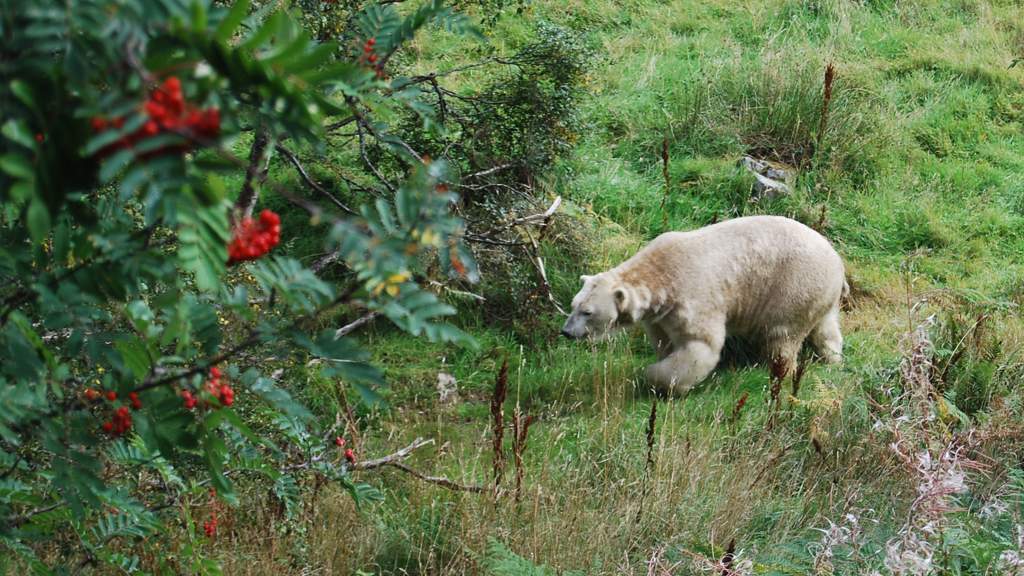 Wandering around the Wildlife Park there is so much to see and currently the park rangers are hoping that their two polar bears Walker and Victoria have been successful in their mating and will provide the park with a fantastic attraction in the form of a baby polar bear in the future.
The range of animals at the park is tremendous, with over 240 roaming the beautiful landscape. Snow Leopards, Deer of numerous varieties, Camels, Arctic Foxes, Owls, Wolves, Musk Ox, Lynx, Red Pandas, Vicuna, Wolverine, Yaks and Turkmenian Markhors can all be found wandering around this fantastic park in such a natural setting and many of them will be producing their own babies over the next few weeks, so do pop along and take a peek.
You can find out more about wildlife all over the Highlands and where you can see it, by visiting the dedicated 'Wildlife' pages on our website. If you want to visit the Highland Wildlife Park, our nearest B&Bs are Glengarry B&B and Slemish B&B in Kingussie